How Does SVC Inverter Technology Support Heavy Duty VFD Operation?
Industrial machines such as conveyors, mixers, crushers, hoists, and processing equipment often experience changing torque demands. Their motors may start under load, run at low speed, or react to sudden resistance during operation. Under these conditions, basic frequency adjustment may not provide enough control. Stable operation depends on how the drive calculates motor behavior and adjusts current, torque, and speed during each operating stage.
How SVC Controls Motor Torque
Sensorless vector control estimates motor operating conditions without relying on an external encoder. The drive uses motor parameters together with measured voltage and current to calculate the motor state. This allows a heavy duty vfd to regulate torque more actively when the mechanical load changes.
An svc inverter separates motor current into components associated with magnetic flux and torque. These components can then be controlled more independently. Compared with basic V/F control, this method can provide a faster response when the motor needs additional torque at low speed or during sudden load changes.
Correct motor data is important for this process. Rated voltage, rated current, frequency, speed, and power should match the motor nameplate. If the entered parameters are inaccurate, the drive may build an unsuitable motor model. This can affect torque estimation, current response, and low-speed stability.
Why Heavy Loads Need More Precise Control
Heavy-duty machines often operate with variable mechanical resistance. A conveyor may start while carrying material. A mixer may process materials with changing viscosity. A crusher may experience short periods of higher resistance when larger material enters the chamber.
A vector control inverter can respond to these changes by adjusting current according to calculated torque demand. This helps the motor react to changing conditions without depending only on a fixed relationship between output voltage and frequency.
Low-speed operation also requires attention. At reduced frequency, the motor may produce less natural cooling while still carrying a significant load. SVC can improve torque regulation in this operating range, but motor thermal limits still need to be considered during machine design and commissioning.
Acceleration time, deceleration time, and torque limits also influence drive behavior. Settings that are too aggressive can create excessive current demand, while settings that are too slow may affect production efficiency. Parameter values should therefore reflect motor size, mechanical inertia, transmission structure, and process requirements.
Terminal Functions in an Automation System
Motor control is only one part of many industrial applications. Drives may also need to receive commands from PLCs, switches, sensors, or process controllers. They may send running status, alarms, speed signals, or other feedback to external equipment.
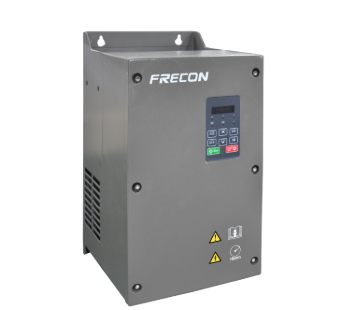
For this reason, terminal flexibility can affect control cabinet design and system wiring. The FR380 Series high-performance drive from FRECON provides multifunction DI, DO, and AO terminals with different logic functions. These options can reduce the need for some external DI and DO wiring in suitable applications.
Its AI terminal can also operate as a multifunction DI terminal. The drive includes multiple groups of virtual DI and DO functions for internal logic configuration. High-speed pulse input and output are supported up to 100 kHz, which can be useful when faster pulse-based signals need to be exchanged with external automation equipment.
These terminal functions do not replace correct control design. Engineers still need to decide which commands, interlocks, alarms, and feedback signals should be handled by the drive and which should remain in the PLC or other control devices.
SVC Settings Must Match the Machine
Different machines require different control strategies. Fans and centrifugal pumps usually have different torque characteristics from conveyors, hoists, mixers, or crushers. A single parameter set should not be copied across several machines simply because their motors have the same rated power.
When supported, motor autotuning can help the drive identify motor characteristics before operation. This can improve the motor model used by the SVC algorithm. The machine should still be checked under real load because actual inertia and mechanical resistance are not determined by motor data alone.
Protection parameters are equally important. Overcurrent, overload, voltage, and thermal settings should match the motor and driven equipment. In heavy-load applications, unsuitable protection values may cause unnecessary trips or allow the machine to operate outside the intended range.
Commissioning should therefore include both electrical and mechanical checks. Engineers should observe current behavior during starting, low-speed operation, load changes, acceleration, and deceleration. These observations help determine whether torque limits and response settings are suitable for the actual process.
Selecting the Drive Around Real Operating Conditions
Drive selection should start with the application rather than only with motor power. Duty cycle, overload duration, low-speed torque, start frequency, environmental conditions, signal requirements, and control method all affect the final choice.
In projects where configurable signal functions are also required, the FR380 Series from FRECON combines vector control with DI, DO, AO, virtual terminal functions, and high-speed pulse input and output. These features can simplify integration when the machine requires both motor control and several external signals.
A second vector control inverter with the same power rating may still need different settings if the connected machine has different inertia or torque characteristics. Matching drive parameters to the actual mechanical system is therefore more important than relying only on rated power.
What Makes SVC Practical for Heavy-Duty Operation
SVC helps a heavy-duty drive estimate motor conditions and regulate torque without an encoder. Its main value appears when the machine operates under changing loads, requires low-speed torque, or needs a quicker response to mechanical resistance.
An svc inverter still depends on correct motor parameters, suitable acceleration settings, realistic torque limits, and proper protection values. For engineers, the practical task is to match these settings with the real motor, transmission, load pattern, and duty cycle instead of applying one standard configuration to every machine.